





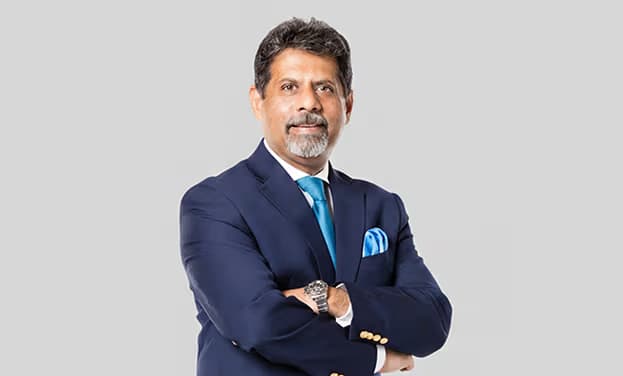
In this conversation, Mahadik speaks about what cross-industry experience really teaches a leader, where Indian multinationals get global HR wrong, and why the future of the function will be about humans and AI working together — not one replacing the other.
You've built your HR career across five organisations with five distinct cultures. Most HR leaders go deep in one sector. You went wide. What does that cross-industry journey actually teach you that staying in one lane never could?
I've always believed that cross-industry experience sharpens your perspective — it makes you realise that business context defines talent strategy, not the other way around. Each industry operates on a distinctly different set of value drivers and constraints. For instance, FMCG teaches you speed, execution discipline, and consumer-centricity; healthcare and pharma operate in far more complex, highly regulated environments that demand long-term thinking. Experiencing these contrasts shifts your vantage point — you begin by asking how the business creates value, what risks it carries, and what capabilities it truly needs.
Over time, this breadth helps you move beyond being a functional HR leader to becoming a business leader. It builds the ability to move seamlessly from the factory floor to the lab to the boardroom — understanding each context and aligning them to a common organisational purpose.
"That is where HR stops being a support function and begins to create real enterprise value."
Pharma is one of the few industries where you are simultaneously asking your workforce to be deeply innovative and completely process-compliant — sometimes in the same building, sometimes in the same person. How do you build an HR architecture that holds both of those cultures without one killing the other?
In any organisation, the starting point is recognising that different parts of the business operate under fundamentally different realities, and the HR architecture must be designed to support and align with those differences.
A company that is fully compliant but not innovative will stagnate, while one that is innovative but not compliant cannot sustain itself; the goal is to enable both to coexist. In manufacturing and quality functions, precision and adherence to standards are critical because they safeguard patient safety. In contrast, R&D, drug discovery and digital transformation require experimentation and informed risk-taking, where learning often comes from failure.
"What brings these together is a shared purpose — when people see how both contribute to improving patient outcomes, innovation and compliance become complementary rather than competing forces."
Lupin operates across India, the US, Europe, South Africa, Japan, and beyond. Managing a genuinely global workforce is very different from managing a large domestic one. Where do most Indian companies — even sophisticated ones — still get global HR wrong?
One of the most common misconceptions I see among Indian multinationals is the assumption that what works well in India can be repackaged and translated globally with minimal adaptation. In reality, global organisations succeed not by replicating models but by building frameworks flexible enough to adapt to diverse market, cultural, and regulatory contexts. There are endless examples of companies patronising their values overseas and failing terribly.
Typically, global HR goes wrong in three specific areas:
- Confusing "global" with "centralised." A strong global organisation sets clear principles and governance but empowers local leadership to execute in ways relevant to their markets.
- Underestimating cultural nuance. What motivates teams, how decisions are made, and how trust is built varies significantly across geographies, and HR systems must reflect that.
- A homogeneous leadership lens. You cannot build a truly global organisation without a highly diverse, localised leadership pipeline.
The pharma industry has a particular relationship with talent that other sectors don't: a scientist who leaves doesn't just take institutional knowledge — they potentially take years of proprietary research. How do you think about retention and talent risk in an environment where the stakes of losing the right person are that high?
In pharmaceuticals, talent risk needs to be viewed slightly differently — here you're not just dealing with roles, you're dealing with knowledge that has been built over years, sometimes decades. This underscores the need to design organisations so that knowledge and capability are not concentrated in a few pockets but are institutionalised and shared. Technology plays a critical role in codifying and preserving that knowledge.
"What truly anchors talent in this industry is the nature of the work itself — the opportunity to solve complex scientific problems and contribute to outcomes that have a real impact on patients' lives."
If you get that environment right, with the right balance of challenge, growth, and purpose, retention becomes a natural outcome rather than something you have to constantly manage.
Pharma has historically been a late adopter of HR technology compared to IT or FMCG. But AI is now arriving at the door of every function. What is your honest view on what AI will — and will not — be able to do in HR within the next five years? And what are you actually doing at Lupin right now?
There is a lot of excitement around AI today, but it is important to separate real impact from hype. AI is a powerful enabler, but it is not a substitute for human judgment. Over the next five years, AI will significantly transform the administrative, transactional, and analytical aspects of HR — streamlining high-volume recruitment, automating routine employee interactions, and enhancing workforce planning through predictive analytics.
"It cannot build trust, inspire confidence, or navigate the emotional and ethical complexities that often define people's decisions."
This is particularly important in HR, where relationships, judgment, and context matter as much as data. The future of HR will not be about humans versus AI; it will be about humans and AI working together, with technology augmenting decision-making rather than replacing it.
At Lupin, we approach AI as a force multiplier for decision quality and organizational effectiveness. We have deployed a fully digitised recruitment suite integrated directly with our core HR systems. In learning and capability building, AI is helping us personalise development journeys and recommend relevant learning interventions. For our field-based teams, we use "SmartRep" as a digital backbone for coaching and performance tracking, further enhanced by "SmartBuddy" — India's first generative AI-powered virtual assistant for pharmaceutical field teams — to help representatives with personalized call planning, analytics, and instant access to medical information.
The pharmaceutical industry sells wellness to the world. And yet burnout, mental health pressures, and the weight of high-stakes work are very real inside pharma organisations. There is an uncomfortable irony there. How do you reckon with it — and what does Lupin actually do about employee wellbeing that goes beyond the programmes?
At Lupin, we have always believed that our people are not just professionals; they are at the heart of our purpose and the catalysts who bring our vision to life. We understand that building a healthier community starts by building a healthier workforce. In FY25, we deepened our commitment to our employees by anchoring our human capital strategy around three core pillars: capability-building through strategic learning, culture-building through inclusive leadership, and 'care-building' through holistic well-being.
Through our flagship "Well-Being 360" programme, we actively champion physical, emotional, and financial health, pairing a comprehensive wellness curriculum with a digitised dashboard. We recognize that major life milestones, particularly parenthood, require utmost care and flexibility, and therefore offer 26 weeks of paid primary caregiver leave in India, alongside globally tailored parental benefits, hybrid work options, and on-site daycare facilities. Our revitalised "Returnity" programme pairs returning mothers with dedicated mentors and peer allies to ensure a smooth three-month transition. Looking ahead, we are training certified "Wellness Champions" within our daily operations to serve as peer anchors and empathetic advocates, ensuring that support is always within arm's reach.
WELLBEING, IN NUMBERS
3 Core pillars: capability, culture, and care-building | 26 weeks paid primary caregiver leave in India | 3-month structured transition under the Returnity programme | 80% employee satisfaction globally | 89% employee satisfaction in India
"Success is measured not just by our business milestones but also by our ability to nurture talent with genuine empathy, equip them with capability, and align them with our shared mission to heal and uplift lives."
You've watched a generation of HR leaders rise through Indian organizations over the last two decades. What is the one gap — the one thing that consistently separates the HR leaders who end up in the room where decisions are made from the ones who spend their careers executing decisions made by others?
All successful HR leaders share one common defining characteristic: they view business success as their primary agenda, with people strategy as the lever to achieve it. They go beyond traditional metrics and develop a deep understanding of the business — its balance sheet, P&L, market dynamics, growth priorities, and competitive landscape.
The most respected HR leaders are trusted advisors who bring an objective perspective to critical decisions. They have the confidence to challenge assumptions, highlight potential execution risks, and provide alternative viewpoints when needed — all with the organisation's best interests in mind.
"Earning a place at the decision-making table requires a combination of strong business acumen and the willingness to contribute perspectives that help the organization make better decisions."
This interview was first published in Businessworld People on July 27, 2026.